


Social Worker Jean Oda Moy Writes About Coming of Age in World War II-Era U.S., Japan
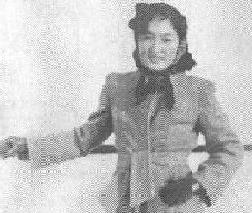
Jean Moy on the boat Hikawa Maru when her family returned to Japan in 1940. Photo from "Snow on Willow."
Social worker and author Jean Oda Moy knows what it is like to be an outsider.
She was born in 1926 in Washington State to parents from Japan. Although the Japanese community was close-knit, Moy remembers some white people called her “Jap” and tauntingly told her to go back home, salespeople often ignored her, and Japanese Americans were not allowed in public swimming pools.
The situation reversed when her family returned to Japan shortly before the outbreak of World War II. She soon discovered she was also an “other” in Japan.
“I was treated as an outsider because initially I could not read nor speak Japanese fluently and because of the anti-U.S. sentiment there,” she told SocialWorkersSpeak.org via email. “I was called ‘Yankee girl’ and treated as an outcast. In a land where social conformity is and was of utmost importance, being different is anathema, and I was different. As a teenager, those were painful years for me.”
Moy writes in her new memoir, “Snow on Willow: A Nisei Memoir,” about growing up in America during Great Depression. She also survived bombings and food shortages in Japan during World War II and visited the city of Hiroshima soon after it was destroyed by an atomic bomb.
The fast-moving book also chronicles how a very independent Moy defied Japan’s second-class treatment of women and moved back to the United States alone to further her education.
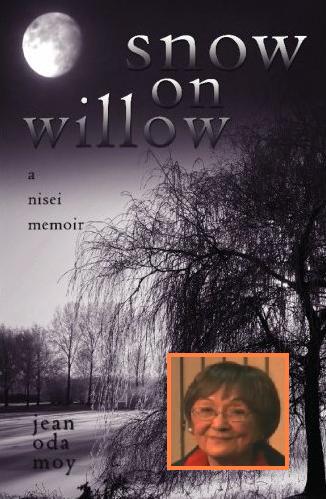
Jean Oda Moy (inset) and the cover of her book "Snow on Willow: A Nisei Memoir"
She also translated three Japanese books into English and won the Cultural Award from the Japan Society of Translators for her work translating the book Tun-huang by celebrated 20th century author Yasushi Inouye.
Growing up in Japanese and American cultures and in a home of an alcoholic and sometimes violent father influenced her social work career, Moy said.
“I think that having lived in both countries helped me to understand that beneath cultural differences people are all alike,” said Moy, who lives in Los Altos, CA. “That is, although they may express their feelings and beliefs in different ways, they are all human beings who love, hate, get angry, anxious, scared and happy.”
You can purchase a copy of Moy’s book on Amazon.com. To learn more click here.
You can also listen to Moy reading and excerpt of her book at the Palo Alto City Library by clicking here.
Social workers such as Jean Oda Moy are charged with treating people of all racial, cultural and sexual backgrounds with fairness, respect and with dignity. To learn more visit the National Association of Social Workers Diversity & Cultural Competency Web page by clicking here.
| Leave A CommentAdvertisement
4 Comments
Leave a Comment
You must be logged in to post a comment.

Dear Jean Moy,
I have often thought of you and am very happy to have been updated on your activities.
I hope you get this email. I would love the opportunity to tell you how much you helped me and consequently my daughters.
My 3daughers are wonderful grown women with happy lives. Today, after many years of struggle i live a great life. Many times I’ve wanted to tell you this.
I simple have wanted to express my gratitude to you.
Sincerely, (Sandy) Sondra Kay 831-479-4897
Social work of women of Japan is very appreciable, which shows their hard work and modernization. Almighty has blessed Japan with hardworking ladies who have share with men in creating Japan a new world.
Good luck
Dear Jean,
I just put Snow on Willow in my Amazon Shopping Cart! I look forward to learning more about what is surely an intriguing and very special life.
Like another commenter here, I’ve often thought of you over the years with deep gratitude. Today I woke up with you on my mind, and am so glad to find this review and (fingers crossed) a means to communicate with you.
Thanks partly to your counseling, friendship, and encouragement 25 years ago, my marriage is loving and I have a deep sense of self and spirit. I crafted a second career as a landscape architect and enjoy spending time in nature and designing places that enhance people’s lives. (I still remember your gifts of grape hyacinth plants, persimmons, and your thriving Eichler courtyard. What inspiration!)
I have traveled all over the world meeting people and, like you, know that everyone is the same everywhere. I’m excited that my next undertaking will be as a photographer and writer. I’ll add my voice to those who have come before me proclaiming messages of love, understanding, and acceptance.
Life’s certainly not without challenges, but I feel positive about mine and look forward to the future with delight. Thank you so much.
Warmly,
Suzan(ne) Hampton
415-745-0182
Dear Jean,
I’ve ordered your book and look forward to reading it.
I would love to catch up with you and see you again after many years.
Please call me when you have time and hopefully we can reconnect.
It would mean a lot to me!
Thank you.
Blessings,
Beverly Kam, LMFT
(408) 370-1182